Hawked
Match & Game Mode Designer
May 2024 - present
I owned high-level match design and game modes — how players enter and spread across the map, what drives their objectives, how often they meet others, and how the pacing and variety of a session feel overall. I worked across most of the project’s teams to keep everything aligned with the match vision, and turned existing content into a cohesive “mystical island of trials and artifacts” experience by specifying missing systems like extraction, in-session power progression, and loot randomization and tying them into a single loop. I also built and analyzed match telemetry to understand session and player flows, then iterated on objectives and pacing to sharply reduce mid-match quits and noticeably improve first-match KPIs.
Genre: Third-person arena shooter
Release: March 4, 2025
Platforms: PlayStation 5, PlayStation 4, Xbox One, Windows, Xbox Series X|S
Engine: Unreal Engine 5


MY DESIGN
Anansi & Decker
Here I want to briefly demonstrate the flexibility of my design approaches using the development stories of two robots as examples.

Anansi
Initial proportion references

It was meant to be the first robot on spider chassis, so I decided to start by leaning into the spider aspect. That’s where the name came from — Anansi, a punchy name of the African spider god, familiar to a wide audience from Neil Gaiman’s American Gods and the TV series based on it.
As a visual reference, I chose a thin spider, since the robot’s class was supposed to be Tactician (something like a support-sniper), but with a large rear section so it wouldn’t be confused with other insects.
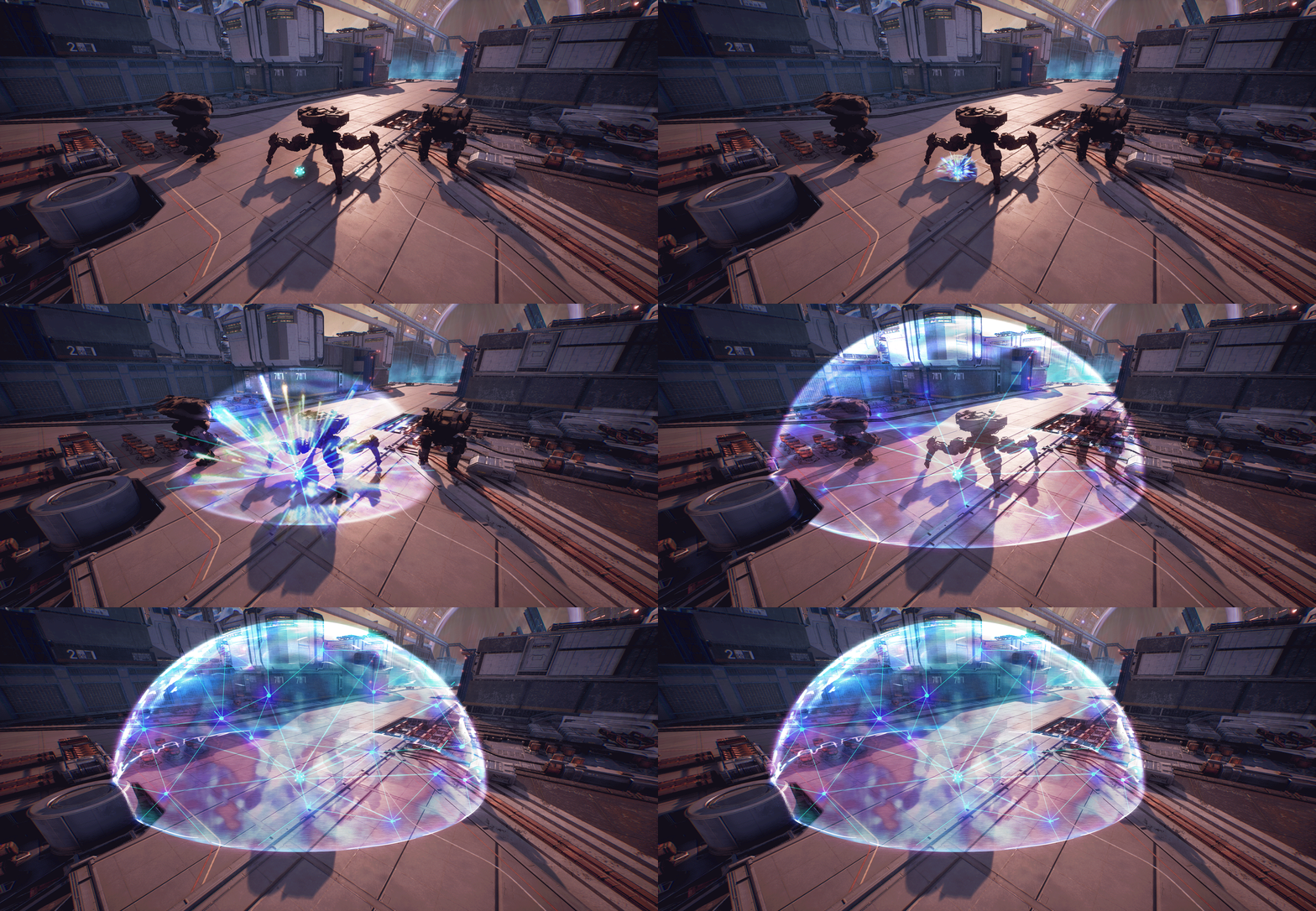
For the main ability I obviously chose a web, but there was already plenty of crowd control in the game, so I decided to go with the idea of camouflage that would allow hiding allies standing inside the web, since the Tactician class is largely about support. It also worked well because the game already had a camouflage mechanic that was used only on the self, which allowed us to reuse.
Since the game strictly followed a sci-fi setting, we decided to use a holographic projection to visually and mechanically mark the area.

From there came the idea to use the enlarged rear section as a container for the holographic projector, which would drop out at the moment the ability is activated.
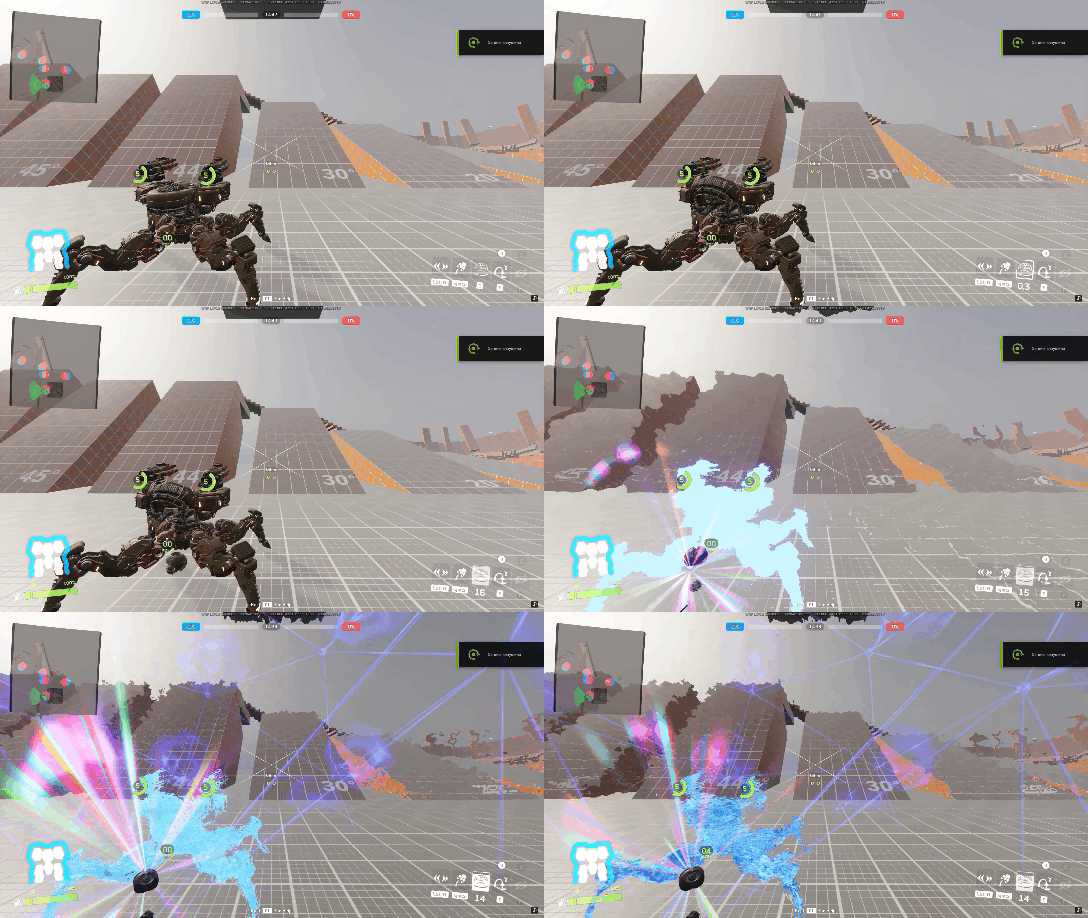
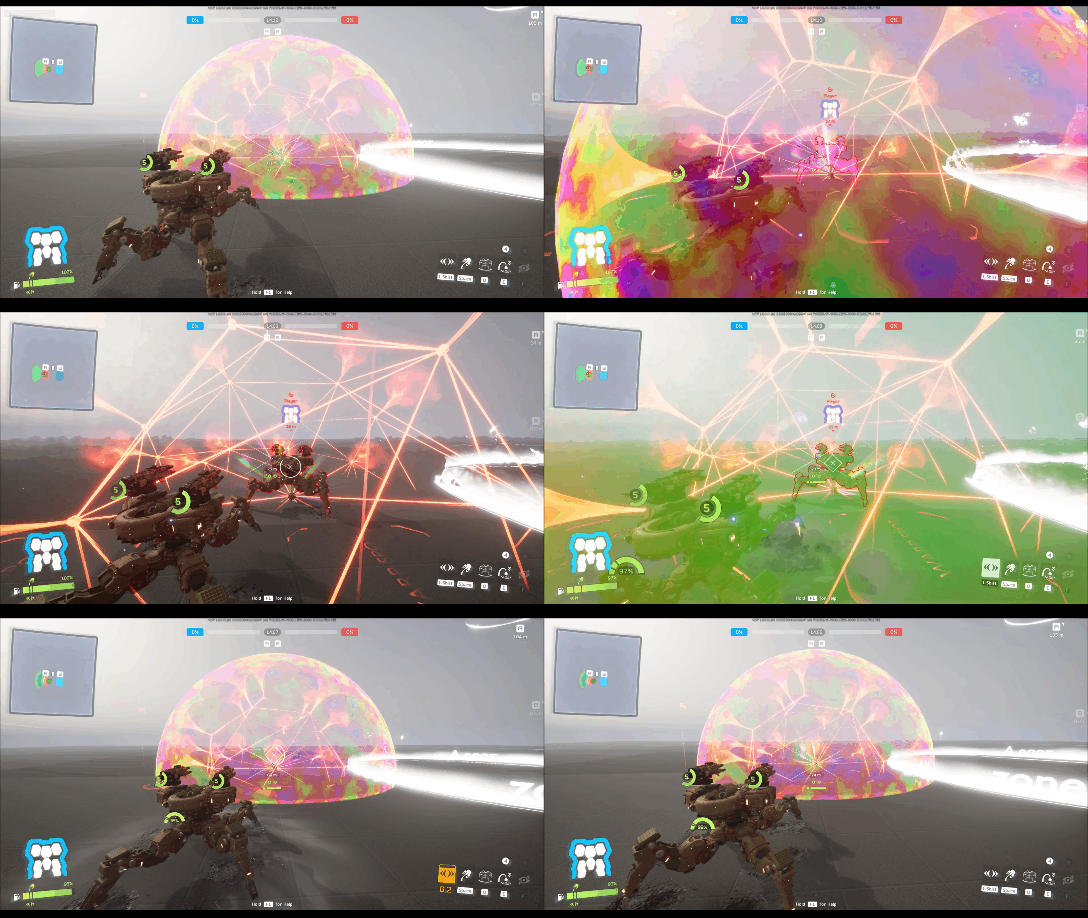
Based on prior feedback and fixes related to artillery and camouflage dominance on other robots, I immediately built counterplay into this ability: an enemy who enters the web starts seeing all opponents inside it.
Final ability description: Creates a Camouflage Web, making allies inside it invisible to enemies outside.
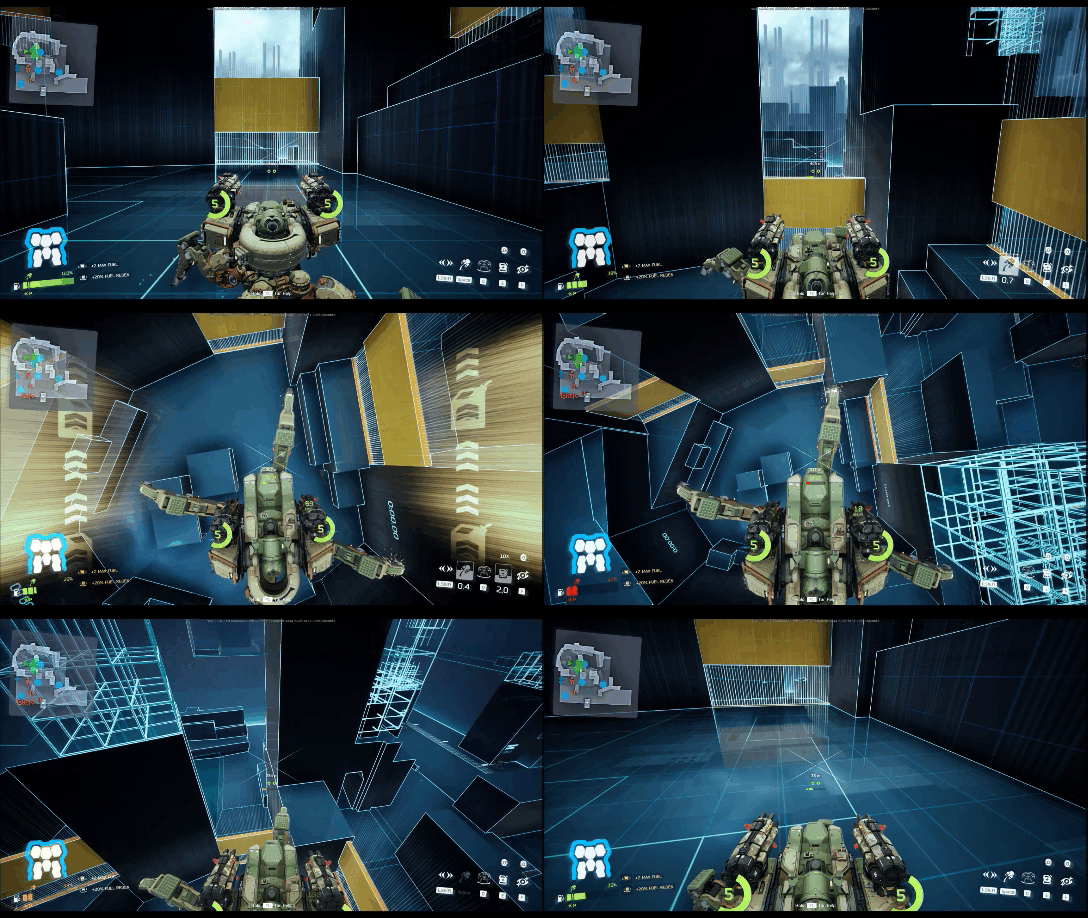
During playtests, the signature ability performed well right away, so from there it was mostly about balance and polish.
However, the unique spider chassis ability that allowed it to perform a “double jump” needed more work. I increased the fuel cost for each subsequent jump in the air to keep the dash ratio consistent across different chassis classes, while still letting the chassis with the smallest fuel pool perform at least one mid-air jump — but without Anansi flying up into the sky.
The release went smoothly, and the robot was fairly well received by players, even though obtaining it was limited either by randomness in the shop or by direct purchase for real money, which makes it much harder to gather gameplay-focused feedback.
On the day Anansi went on sale, ARPU was 20–50% higher compared to the two neighboring robot releases, one of which was intentionally P2W, unlike Anansi.
Below is the "Average Score" broken down by leagues two weeks after release (left) and after the next balance patch (right). Average Score is a parameter I introduced to quickly evaluate a module’s average effectiveness relative to others. In this specific case, the parameter takes into account damage, kills, and win rate of the robots that have this module equipped.

As can be seen from the table, Anansi performed well in the lower leagues but significantly worse in the higher ones. After that, we decided to adjust the values based on the top league, and I calculated a set of changes using a formula, which brought it into perfect alignment.
Decker

This was the third robot on spider chassis. Apart from the Assault class, there were no other requirements, so I decided to start from the ability.
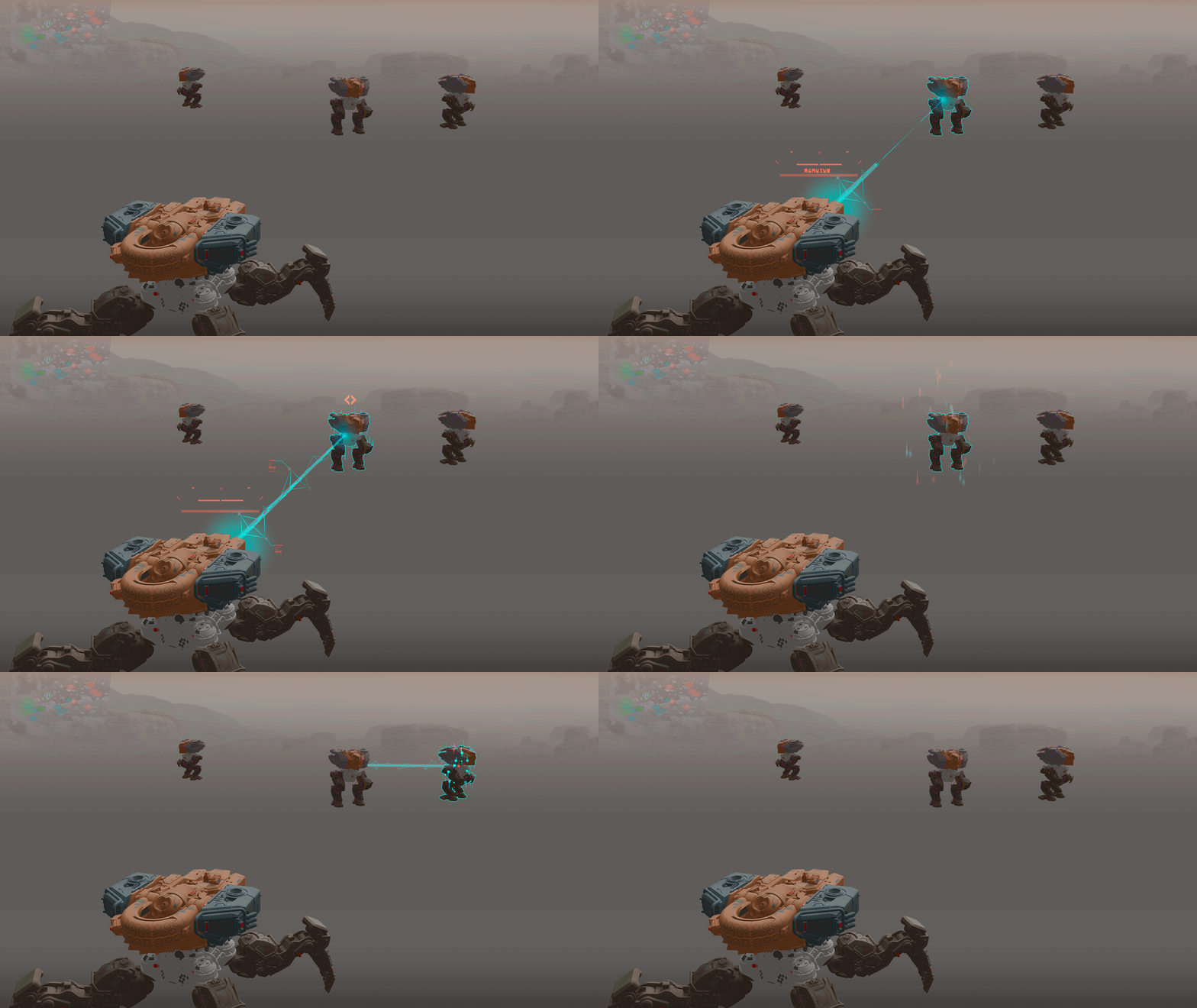
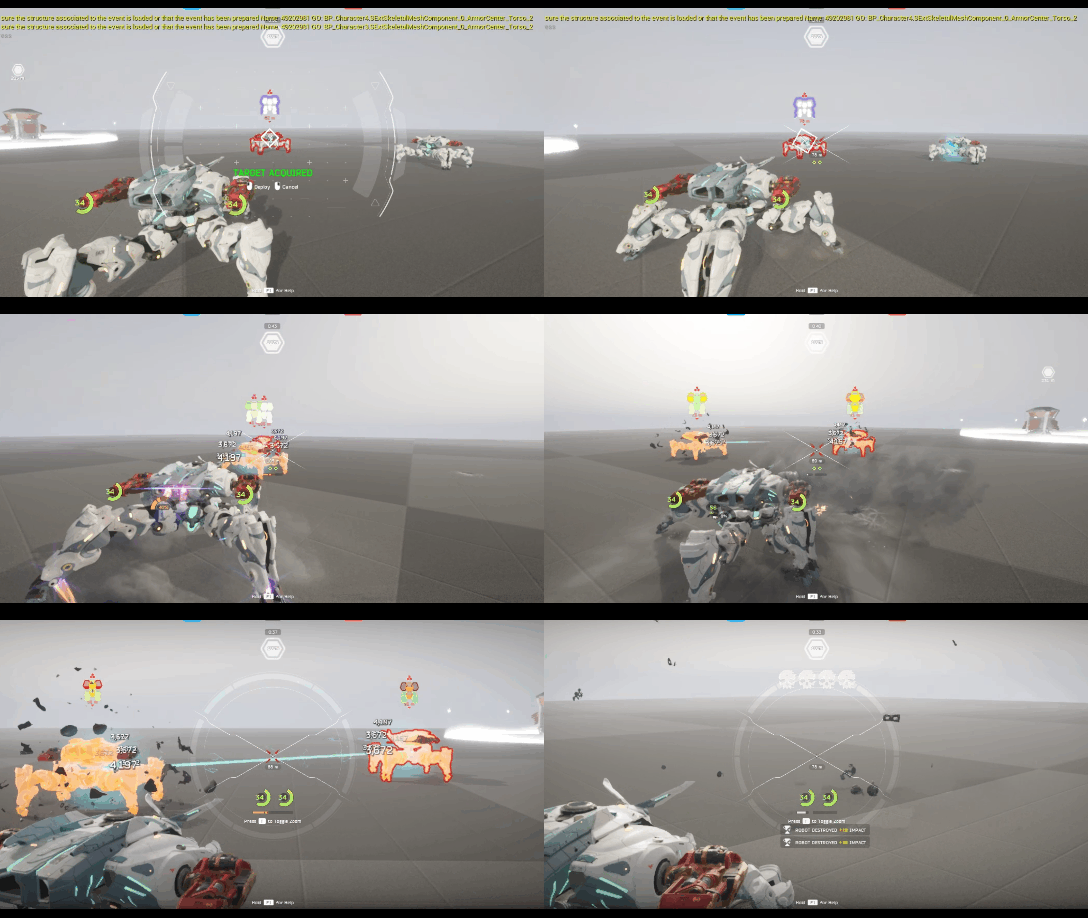
At that point in the meta, combo built around tightly grouped robots that buffed each other in a small radius were gaining popularity, so I decided to create an ability that could force that kind of group to scatter.
After going through different options, the most interesting one seemed to be an ability that slowly chains between enemies and deals massive damage if they keep staying close to each other. In a sci-fi setting, Hacking turned out to be a great visual for this kind of ability, and it already existed in some form in the game.


After defining hacking as the main ability, I realized this Assault could become the first distinctive mech for the Fort Evo faction. I moved the design toward neon highlights and rounded forms, and the artist suggested Till Freitag’s works as an additional reference, which aligned well with Fort Evo’s biotech identity.

The first playtest of the ability went terribly.
Since the ability dealt a colossal amount of damage if you didn’t react to it in time, it needed significant improvements to make it more readable.
First of all, the beam itself was made more noticeable: its thickness was increased, and a friend-or-foe color separation was added.



Next, a fullscreen effect was added around the edges of the screen whenever you’re being hacked.
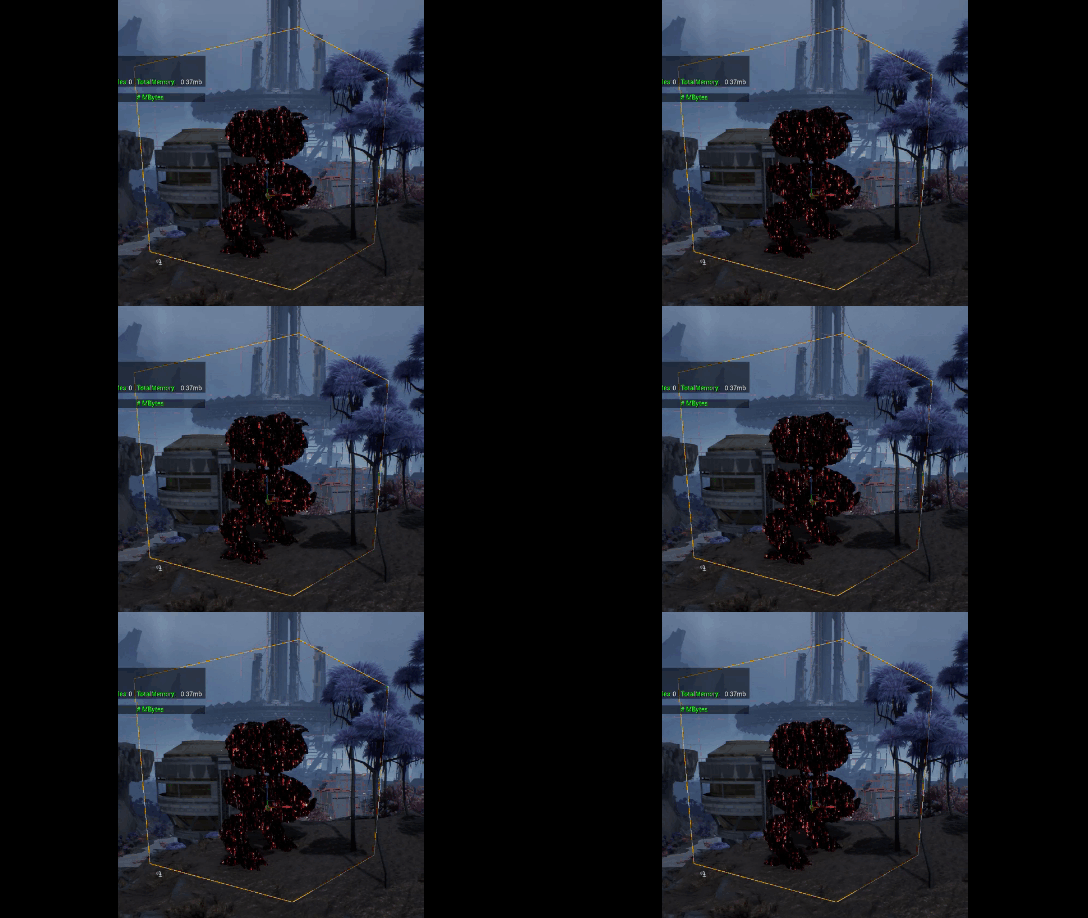
And the effect on the infected robot was also made more noticeable.
In addition to the visuals, the spatial sound was improved, the collision check between robots was refined, and the hack duration and the distance at which the ability breaks were slightly adjusted.
As a result of all these adjustments, the ability started to play well and the release went smoothly.
Unlike Anansi, Decker could be obtained much more easily without spending real money, which meant many more people were able to try it. The robot was warmly received by players and played exactly as intended.
According to telemetry, its balance was close to perfect right from the start, and no patches were required.


But most importantly, the original idea of counterplay to the meta of tightly grouped robots worked. Ceres is a classic example of this type of robot.

Bonus
On this project we developed a custom locomotion animation system. Because of the very long acceleration, a robot has to be able to move nicely at any speed for an unlimited amount of time. As a result, all robots share a single base walk animation, which is then modified by a technical designer for each specific model using a set of parameters and curves.
Here I’m showing a few examples of my walk cycles.